
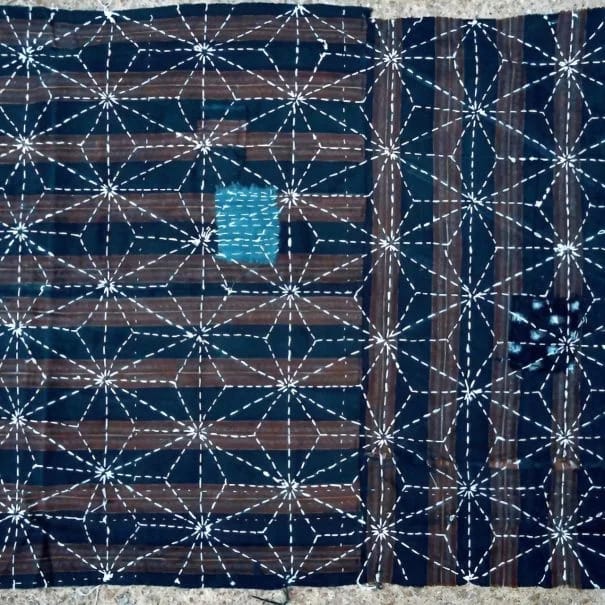
Sashiko (刺し子), which translates to “little stabs,” is a traditional Japanese stitching technique that dates back to the Edo period. While it is celebrated globally today for its striking geometric beauty, its origins were born out of a stark, rural necessity.
A History of Resilience
In the fishing and farming villages of northern Japan, fabric was a precious, hard-won commodity. Commoners were restricted by law to wearing hemp and linen, often in shades of indigo. Sashiko began as a way to make these garments last longer. By stitching layers of old fabric together, women created reinforced, quilted materials that were warmer and significantly more durable.
Over time, these functional running stitches evolved into intricate patterns inspired by nature and Japanese folklore, such as the Asahona (hemp leaf) or Seigaiha (ocean waves). This transformed humble repair work into a form of protective and decorative art.
The Modern Influence: Beyond the Patch
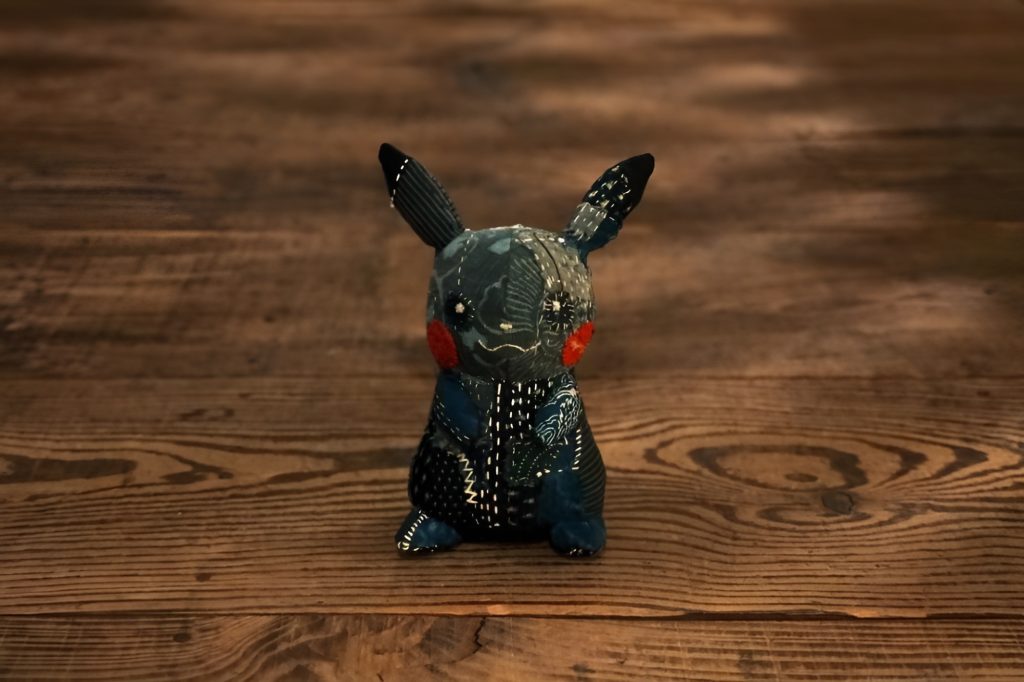
Today, Sashiko has moved from the realm of survival to the forefront of sustainable design. In an era of fast fashion, the philosophy of Mottainai (waste nothing) has seen a massive resurgence. You can see our Sashiko influence in:
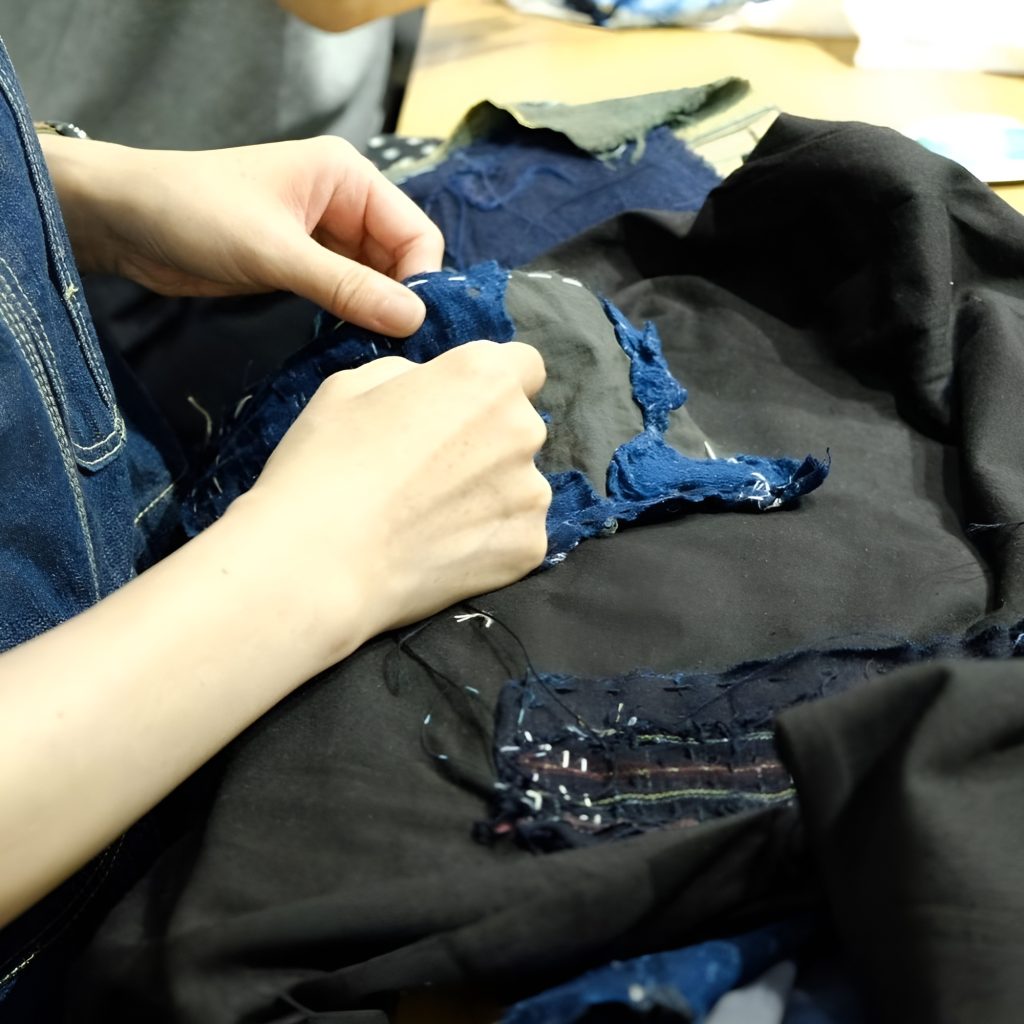
- Visible Mending: Turning a tear in a pair of jeans into a design feature rather than a flaw.
- High Fashion: Major designers now utilize these patterns in streetwear and luxury collections to add texture and a sense of “slow craft.”
- Interior Design: The geometric precision of the patterns is frequently used in modern upholstery and textiles to create a minimalist, Japanese aesthetic.


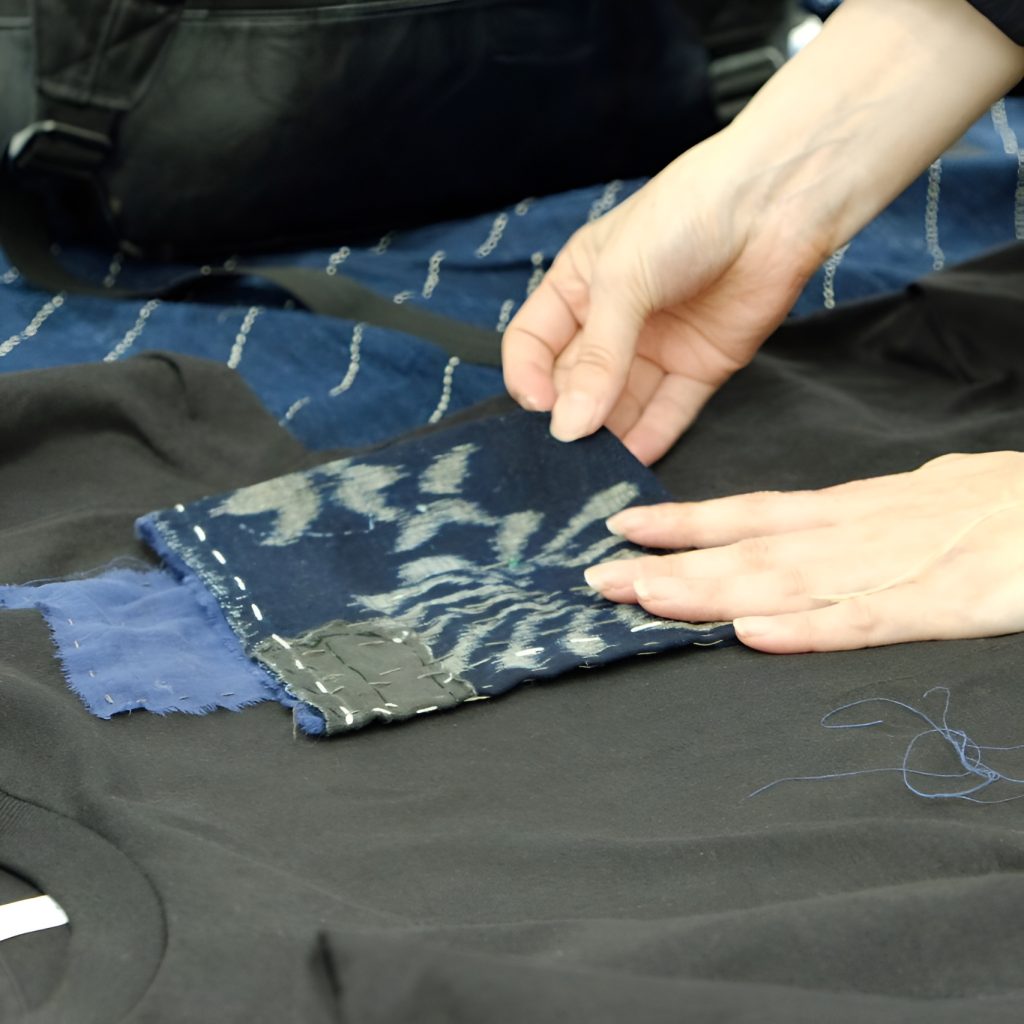
Transferable Skills for Makers
If you already have experience with a needle or yarn—whether through knitting, quilting, or garment sewing – Sashiko offers a unique “unlock” for your existing craft literacy:
- Tension Mastery: For knitters, Sashiko is a masterclass in managing fiber elasticity. You’ll learn the “unshin” (needle rhythm), which requires leaving just enough slack so the fabric doesn’t pucker – a skill that translates directly to maintaining gauge.
- Structural Engineering: Unlike decorative embroidery, Sashiko is functional. It teaches garment makers how to reinforce high-stress areas like elbows or pockets without adding unnecessary bulk.
- Spatial Awareness: Mapping out complex geometric patterns across seams builds a keen eye for symmetry and layout that is invaluable for quilters and pattern makers.
- The Repair-First Mindset: It shifts your perspective from “replace” to “restore,” giving you the technical confidence to mend your hand-knit sweaters or favorite quilts.
Join Us in the Studio
At Pinpoint Traveler, we are dedicated to sharing the authentic techniques of this heritage craft. Our workshops provide a tactile connection to Japan’s history, using traditional indigo-dyed cloth and specialized Sashiko thread.
Sashiko master Jun, founder of JunAle in Osaka, will be your guide and instructor throughout the workshop. Born and raised in Osaka, Jun trained in tailoring before spending time in London and working in the fashion industry, eventually returning to Japan to devote himself to sashiko in 2015. His work blends traditional hand stitching techniques with a contemporary sensibility, rooted in repair, care, and everyday use. In this session, he shares not just the method, but the mindset behind sashiko, guiding you step by step as you learn to stitch with intention and rhythm.
Whether you are a seasoned maker or just beginning your journey into textiles, we invite you to sit with us and learn the art of the little stab in our dedicated studios:
- Osaka Workshop: Join us for a hands-on session in the heart of the city. Book your Osaka spot here
- Kyoto Workshop: Experience the craft in the cultural capital of Japan. Book your Kyoto spot here
Leave a Reply