


Sashiko Studio: Stitching in Kyoto’s Art District
Create a handcrafted Sashiko keychain while enjoying Uji tea and traditional arare in Kyoto’s artist district.
Sashiko Studio
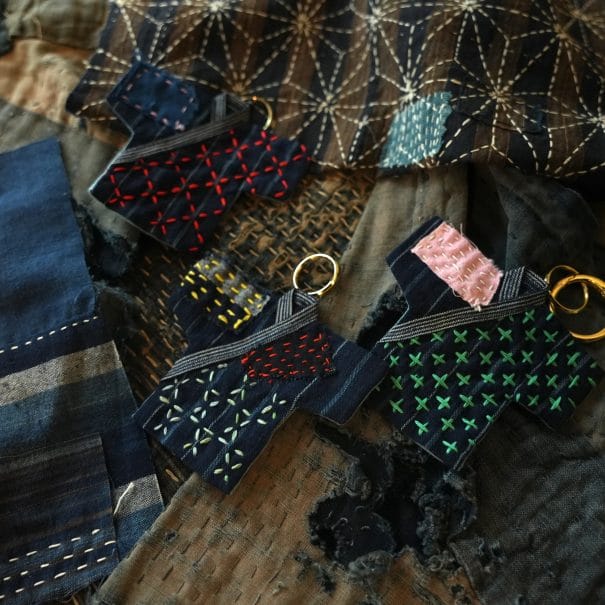
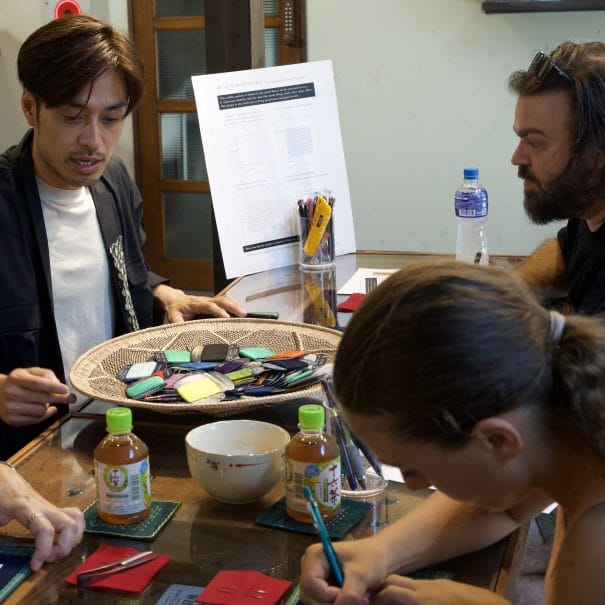
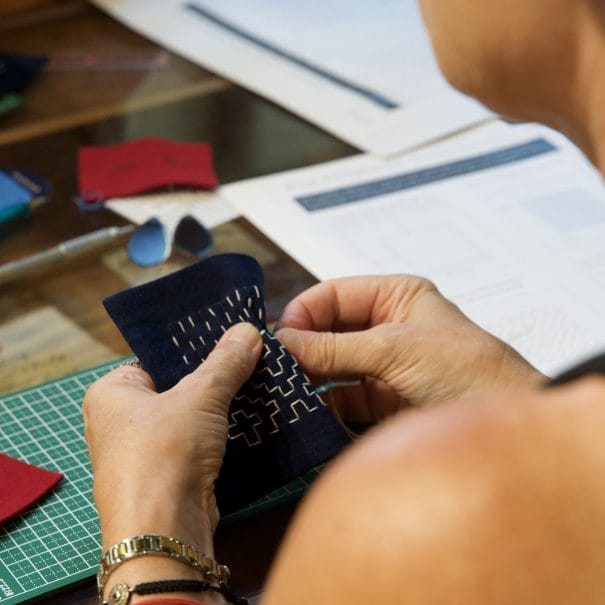
Set in a quiet artist district near Kiyomizu Gojo Station, this hands on Sashiko studio invites you to learn the fundamentals of Japan’s traditional stitching craft in a historic Kyoto building surrounded by working artists. Instead of the coaster made in the Osaka experience, you will create a small keychain inspired by the patterns and style of a traditional Japanese hapi coat. During the session, you will also be served Uji tea and arare, traditional seasoned rice crackers that reflect Kyoto’s tea culture. The studio is led by Jun, a recognized Japanese artisan who has exhibited across Japan and abroad, and if you enjoy the craft, you can also browse the studio’s carefully selected Sashiko pieces on display.
🌟✨ Celebrating Your Feedback, Crafting Memorable Journeys! ✨🌟
Greetings from Pinpoint Traveler! 🌍✈️ We are proud of the fantastic reviews our guests have left for us, graced by an impressive 4.8+ ⭐ average rating across more than 1000 reviews spanning multiple platforms
🌐 Your trust fuels our passion for excellence!


Sashiko
Immerse yourself in the artistry and culture of Sashiko, a traditional Japanese stitching technique. Beginners and enthusiasts alike will enjoy this hands-on workshop.
Professional Instructor
Real English, real skills, and a great personality. Our instructor Jun has the knowledge and expertise to provide you with an interesting, fun, and memorable workshop.
Fully-Narrated Sashiko Workshop
In our workshop, you’ll never be left to figure things out on your own. Your instructor will be with you every step of the way, providing clear guidance, sharing cultural insights, and ensuring you have a fun and engaging experience.
Easy Access
This workshop is conveniently held at our Sashiko workshop, walking distance from Kiyomizu Gojo Station (Keihan) making meeting up an anxiety-free experience.
Does this look like fun? Book tickets today!
History and Evolution of Sashiko
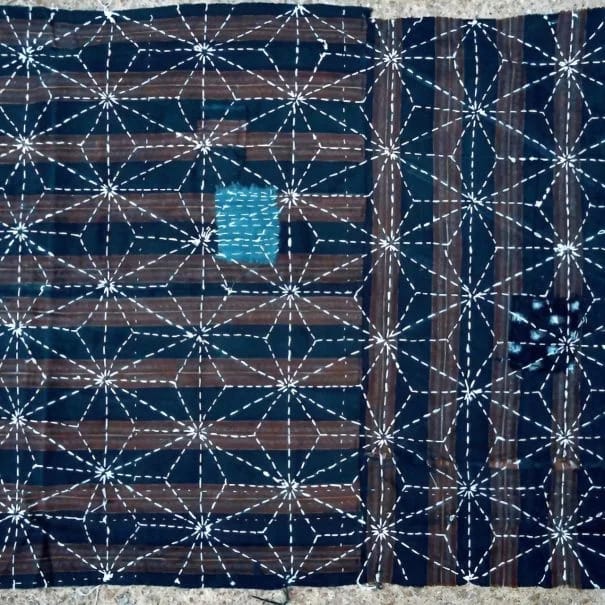
Sashiko, which translates to “little stabs” in Japanese, has a deep-rooted history dating back to the Edo period (1603-1868). Originally, it was developed as a practical method for reinforcing and insulating clothing, particularly among rural communities in Japan. Farmers and fishermen used this technique to mend worn-out garments, making them more durable and warm for harsh winters. Over time, what began as a utilitarian craft evolved into a celebrated art form, with each region in Japan developing its own distinctive patterns and motifs, often imbued with cultural and symbolic meanings.The Workshop Experience
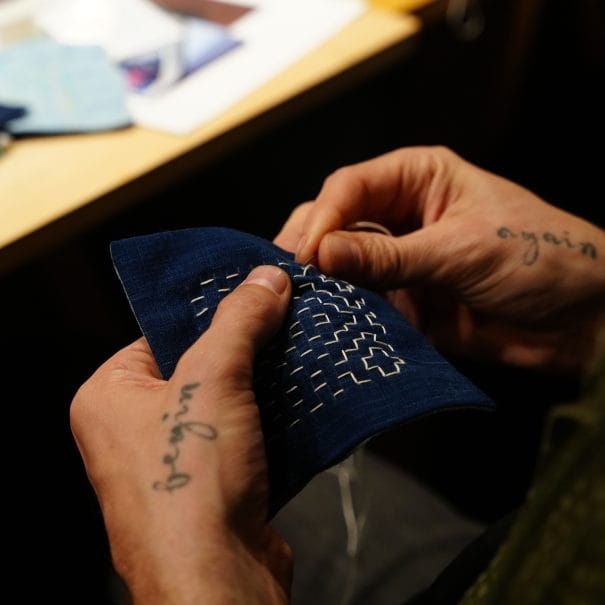
During this hands-on studio experience, you will be guided through the fundamental techniques of Sashiko while creating a small keychain inspired by the patterns and style of a traditional Japanese hapi coat. The session begins with a brief history of Sashiko, followed by a demonstration of basic stitches. You’ll then practice these techniques on your keychain, creating a piece that reflects both your creativity and this centuries-old craft.
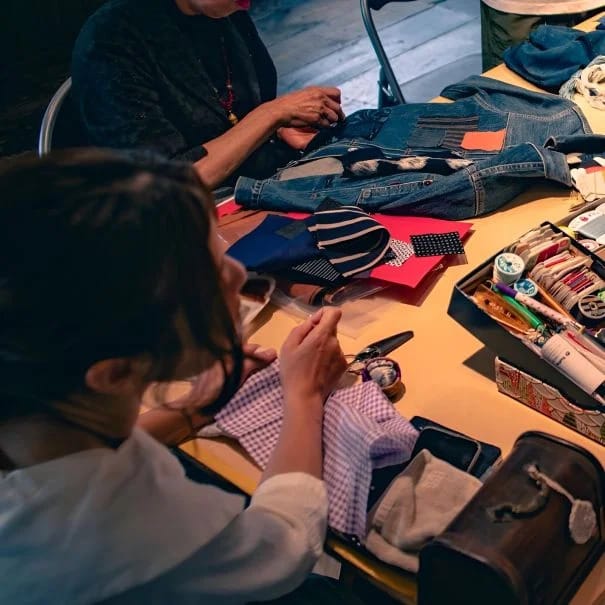
The workshop takes place in a historic Kyoto building in an active artist district, providing a focused environment where you can work on stitching while observing local artists.
While you work, you will be served Uji tea and arare, traditional seasoned rice crackers. Taking a moment to enjoy them lets you experience Kyoto’s tea culture as it has been for centuries, complementing the hands-on practice of Sashiko.
What You’ll Take Away
By the end of the workshop, you’ll leave with a handmade Sashiko keychain, a deeper understanding of Japanese culture, and the knowledge to continue exploring Sashiko on your own. This experience provides both a practical skill and a tangible memento of your time in Kyoto.
JunAle Products
If you enjoy the craft, you can also browse the studio’s carefully selected Sashiko goods on display, including sewing kits, hand-dyed threads, and clothing, with discounts available for cash purchases.
Notes for Sashiko Workshop
Inclusions:
- All Necessary Tools and Materials: Fabrics, needles, threads, and other Sashiko-specific tools provided
- Experienced Instructor: Guided instruction from skilled Sashiko artisans throughout the workshop
- Completed Sashiko Project: Take home your handcrafted Sashiko item
- Cultural Insights: Learn about the history, significance, and symbolism of various Sashiko patterns
Exclusions:
- Transportation to the Venue: Participants are responsible for their own travel arrangements to and from the workshop location
- Insurance: Personal or travel insurance is not included and should be arranged individually if desired
Solo Travelers:
In order to keep our pricing as low as possible, we aim to never charge
more for solo travelers. However, if the minimum of 2 guests is not met
for this tour we will offer you as a solo traveler one of the following 3
options.
- To attend the tour on an alternate date.
- Pay a 3000 yen solo supplement
- Receive a full refund
Easy Access
We start our tour walking distance from Kiyomizu Gojo Station (Keihan).


Your Instructor Jun

Jun
Instructor
Meet your instructor, Jun, a skilled Sashiko artisan with years of experience in traditional Japanese crafts. Passionate about preserving and sharing this art form. They bring both expertise and warmth to the workshop, ensuring that every participant feels supported and inspired as they create their own beautiful Sashiko pieces.

Get to know some of our guides
We’re proud to have a diverse team of personable, knowledgeable guides fluent in both English and Japanese, serving travelers across multiple regions of Japan. Here, you’ll get to know just a few of the exceptional people who bring our tours to life.

Laura
Guide in Kansai Region
Japan has always been a dream of mine; and it certainly hasn’t disappointed. I’ve now been living on this beautiful island for over seven years!
Originally from France, I’ve always been fascinated by Japan’s deep culture, timeless beauty, and the authenticity of its people. Over time, I truly fell in love with the Kansai region, not only for its incredible variety of food, but also for the many warm and memorable encounters I’ve had here.
That’s why I’m so excited to share this unique journey and experience with you during our tours!
Kensuke
Guide in Hiroshima Region
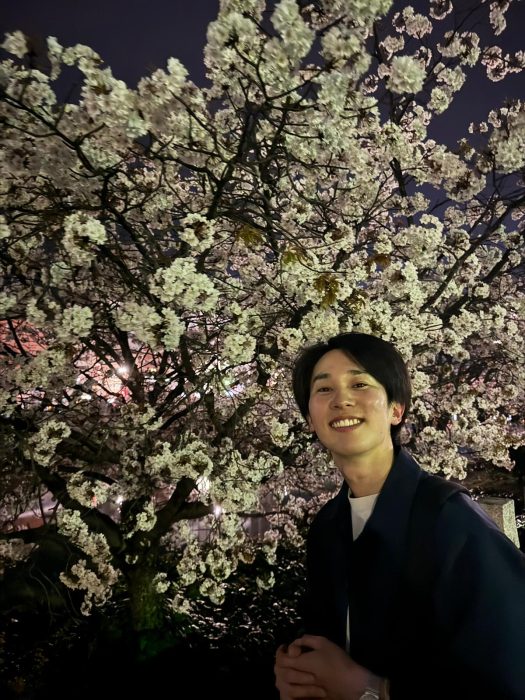
Based in Hiroshima, Kensuke has a deep appreciation for the city’s unique atmosphere, rich history, and incredible food. He enjoys exploring the roots of Japanese culture and traditions, and through his guiding, he aims to share not only historical facts but also the values and character that define the Japanese people. His goal is to convey perspectives and insights that only a native Japanese person can truly express.

Ferdinand
Guide in Kansai region
A native of France by birth, I have, for the past seven years, made my home in the city of Osaka, having previously resided in Tokyo.
Combining my love for Japan, its rich traditions and culinary delights, and the simple pleasure of walking and meeting new people, I decided to pursue a career where I can have these fervent passions shared with others; because I am deeply in love with the somewhat timeworn charm of Osaka’s post-war industrial visage, and the mysterious and quiet charm of its labyrinthine alleyways.

Michelle
Guide in Tokyo Region
Taiwanese-Italian by heritage, Japan resident for the last 10 years, and lifelong fan of a good story. Though I’ve lived here long enough to know the quiet backstreets and the best local snacks, I still explore with the curiosity of a first-time visitor. Fluent in English (it’s the language I’ve always lived in), plus Japanese and Italian, I’m the kind of guide who makes you feel like you’re catching up with an old friend, the one who just happens to know all the history, hidden corners, and how to get the perfect photo.
Meeting Point
With advance notice, pickup at Kiyomizu Gojo Station (Keihan) can usually be arranged
Comments are closed.